" height="1913.5619468363557px" id="NtSzvO2Se" width="4480.43442910271px"/></svg>)
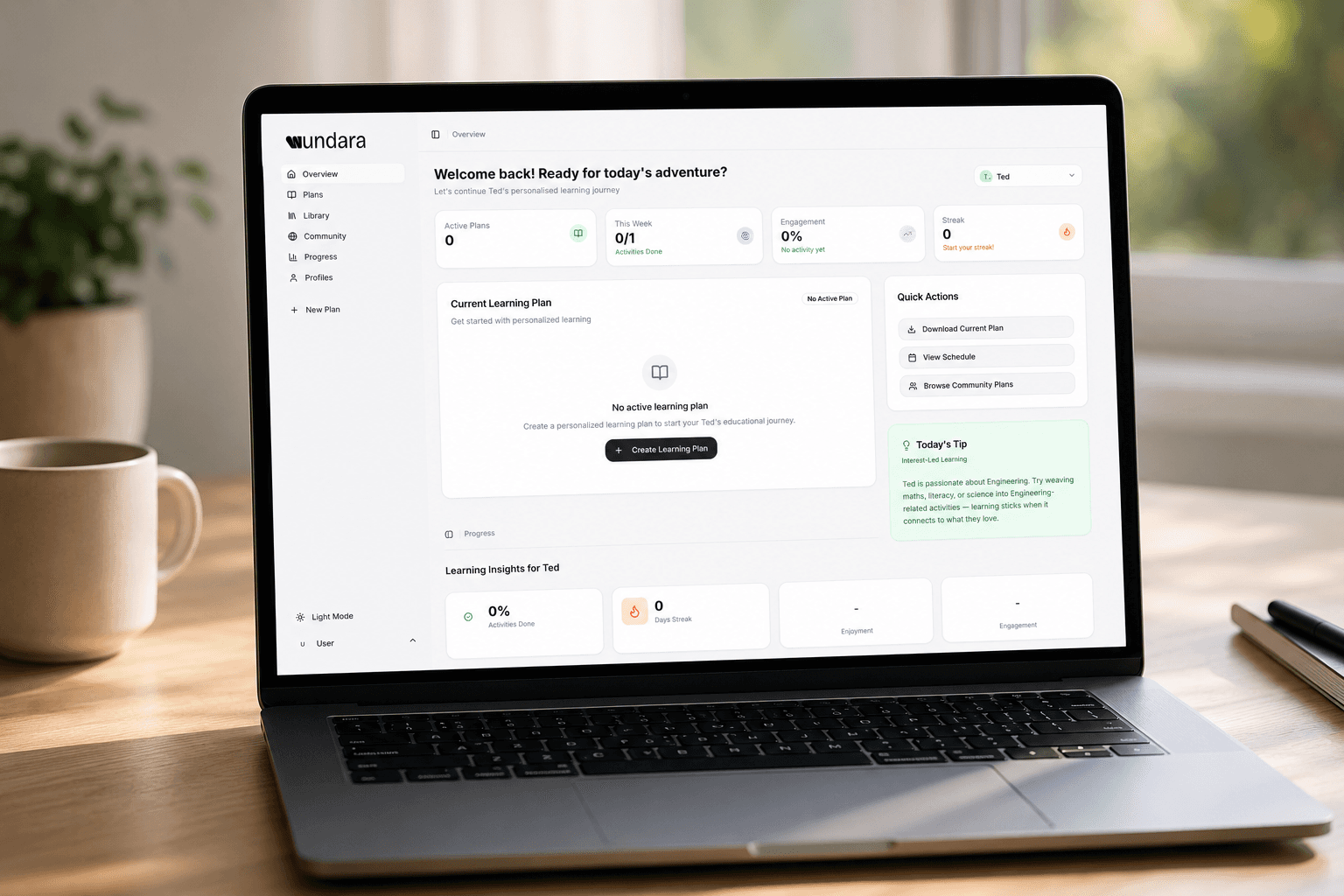
Wundara App
/26
The Challenge
The edtech market is full of apps that bolt accessibility on as an afterthought. Rigid learning paths. Visual overload disguised as engagement. Deficit-first language. No room for the hyperfocus rabbit holes where neurodivergent learners actually thrive.
Parents and educators supporting these kids are exhausted — stitching together PDFs, YouTube channels, and gut instinct with no through-line and no community.
The Goal
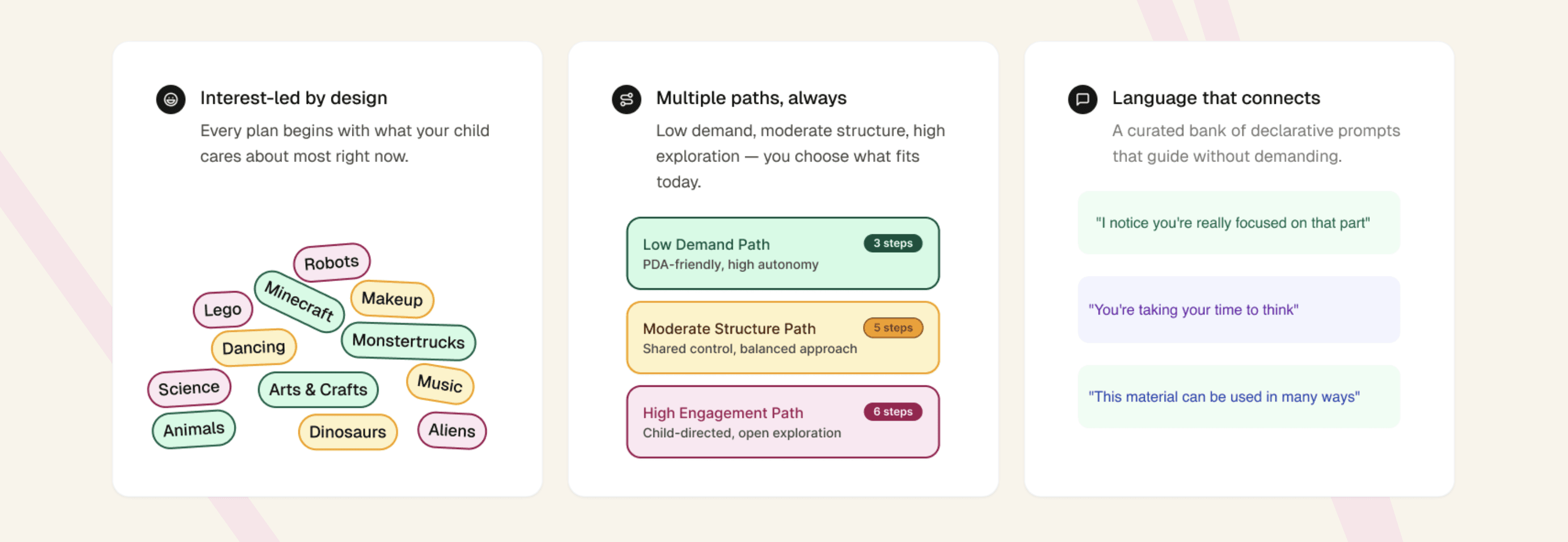
Build a platform where a child's obsession with space, dinosaurs, or Minecraft becomes the gateway into real, curriculum-aligned learning — not something to be managed or redirected. Strengths-first. Affirming by default. Genuinely accessible, not just technically compliant.
Process
Research & strategy first. Before touching a screen, I immersed in neurodiversity-affirming practice — PDA-informed approaches, declarative language principles, Ross Greene's collaborative problem-solving. The north star: "Start with who they already are."
Brand built for the space between. Wundara needed to feel warm and credible without edtech's infantilising pastels or clinical blue. A full language guide was developed alongside the visual identity — every string of copy reviewed for deficit framing before it shipped.
Website designed in Figma, built in Windsurf. The marketing site was a single-page conversion tool: emotional resonance first, product explanation second. Designed in Figma, then brought to life using Windsurf with Netlify and Clerk handling deployment and auth.
App evolved through the build. Early versions were prototyped in Cursor to validate the core flows fast. As the product matured, the build moved to Windsurf — better control, closer to the design intent. The Cursor → Windsurf arc wasn't a detour. It was the right tool for each stage.
Inclusive design as a constraint, not a checklist. Every UX decision was interrogated: one action per view, no colour-only meaning, no jarring transitions, onboarding that feels like a conversation not a form. The language in empty states and error messages matters as much as the screens themselves.
Solution
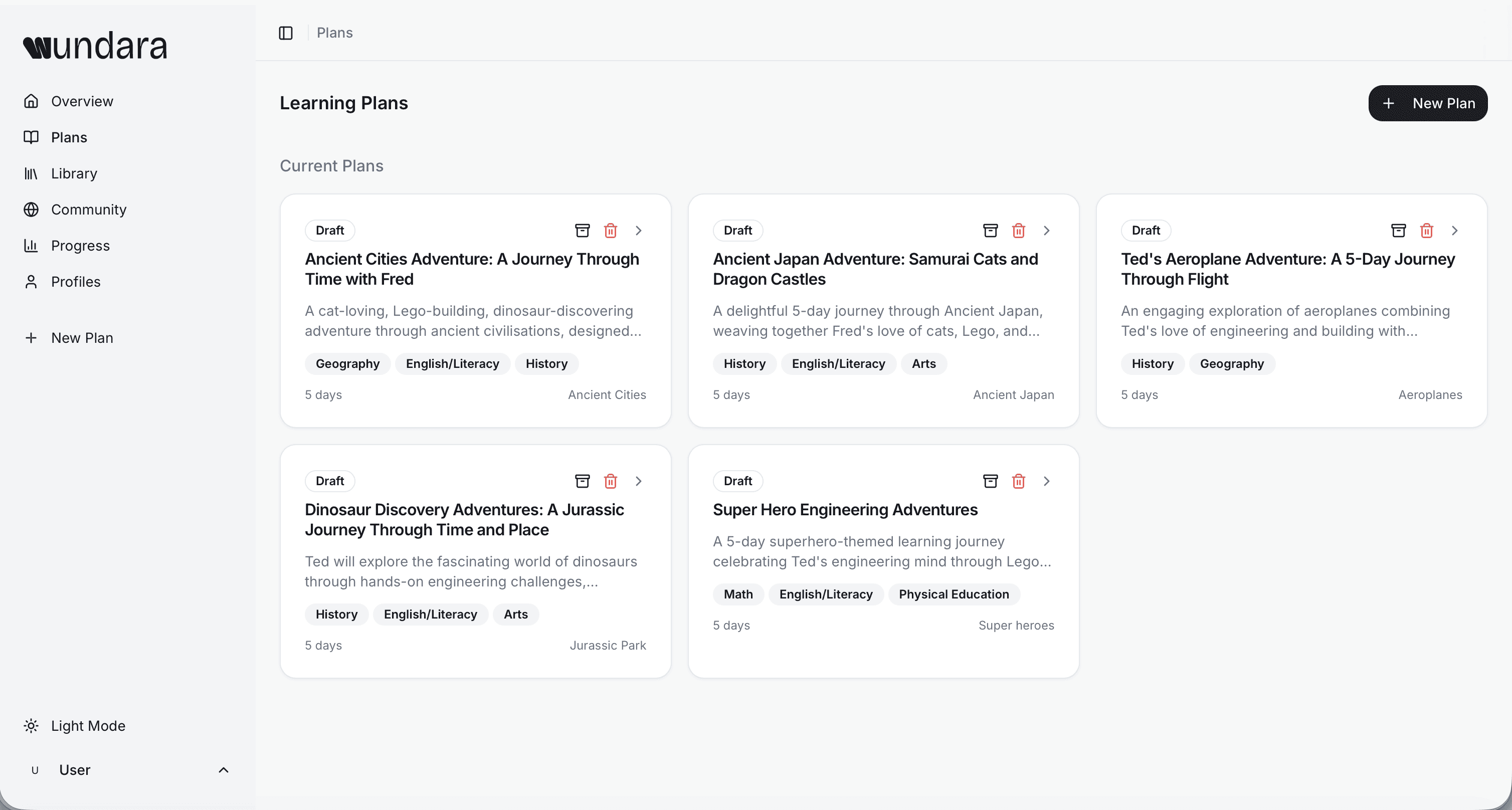
A live, early-access platform — concept to production — built by one designer:
Personalised learning plans built around a child's interests and neurotype, aligned to the Australian Curriculum
Multi-path lessons with Low Demand, Moderate Structure, and High Engagement pathways — because what works Tuesday doesn't always work Thursday
Declarative language bank giving adults the right words in the moment
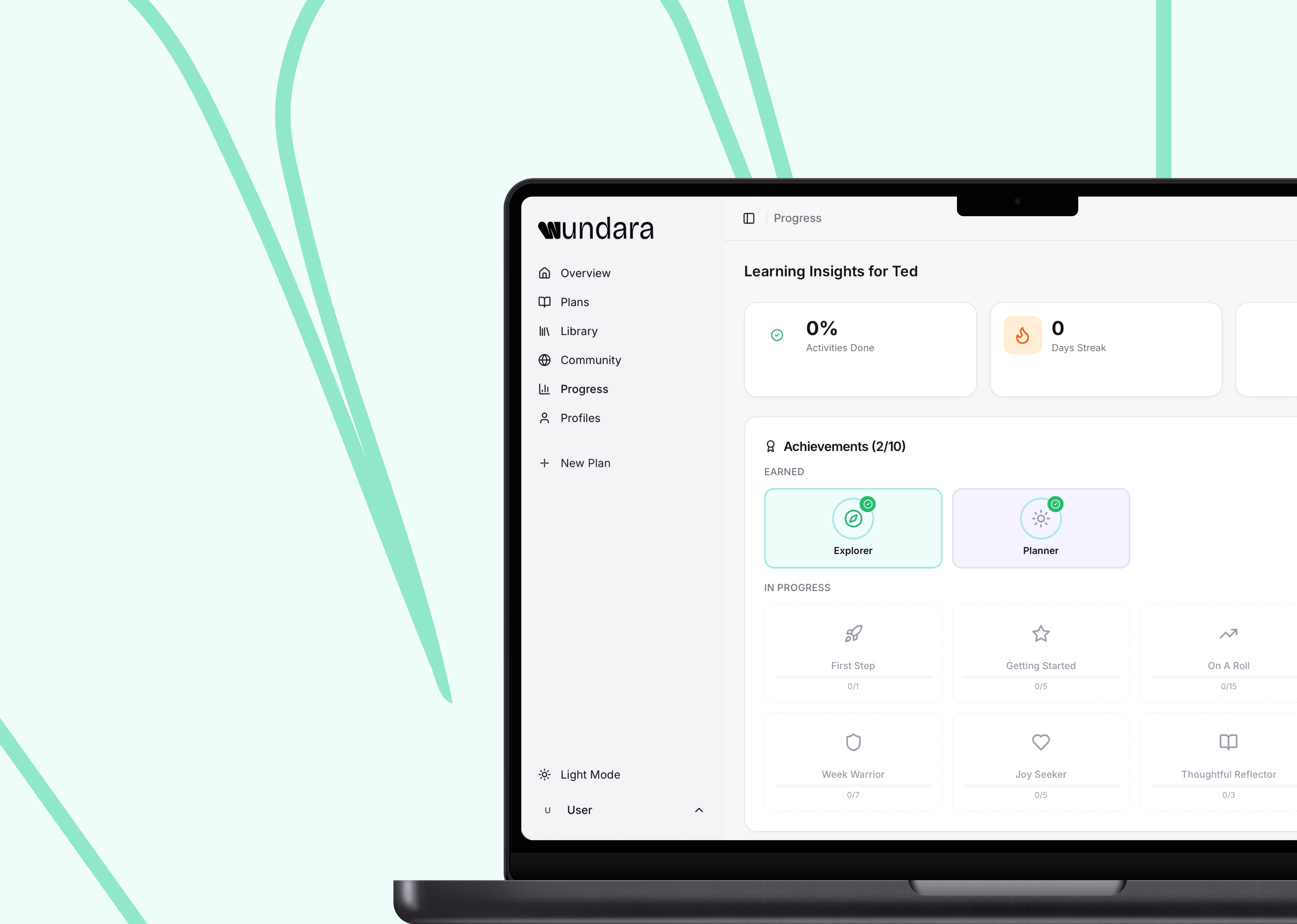
Progress tracking that celebrates non-linear wins
Community for parents and educators who finally feel seen
"When you design for the edges, you design better for everyone."