" height="1913.5619468363557px" id="NtSzvO2Se" width="4480.43442910271px"/></svg>)
Domino's Offers App
/23
The Challenge
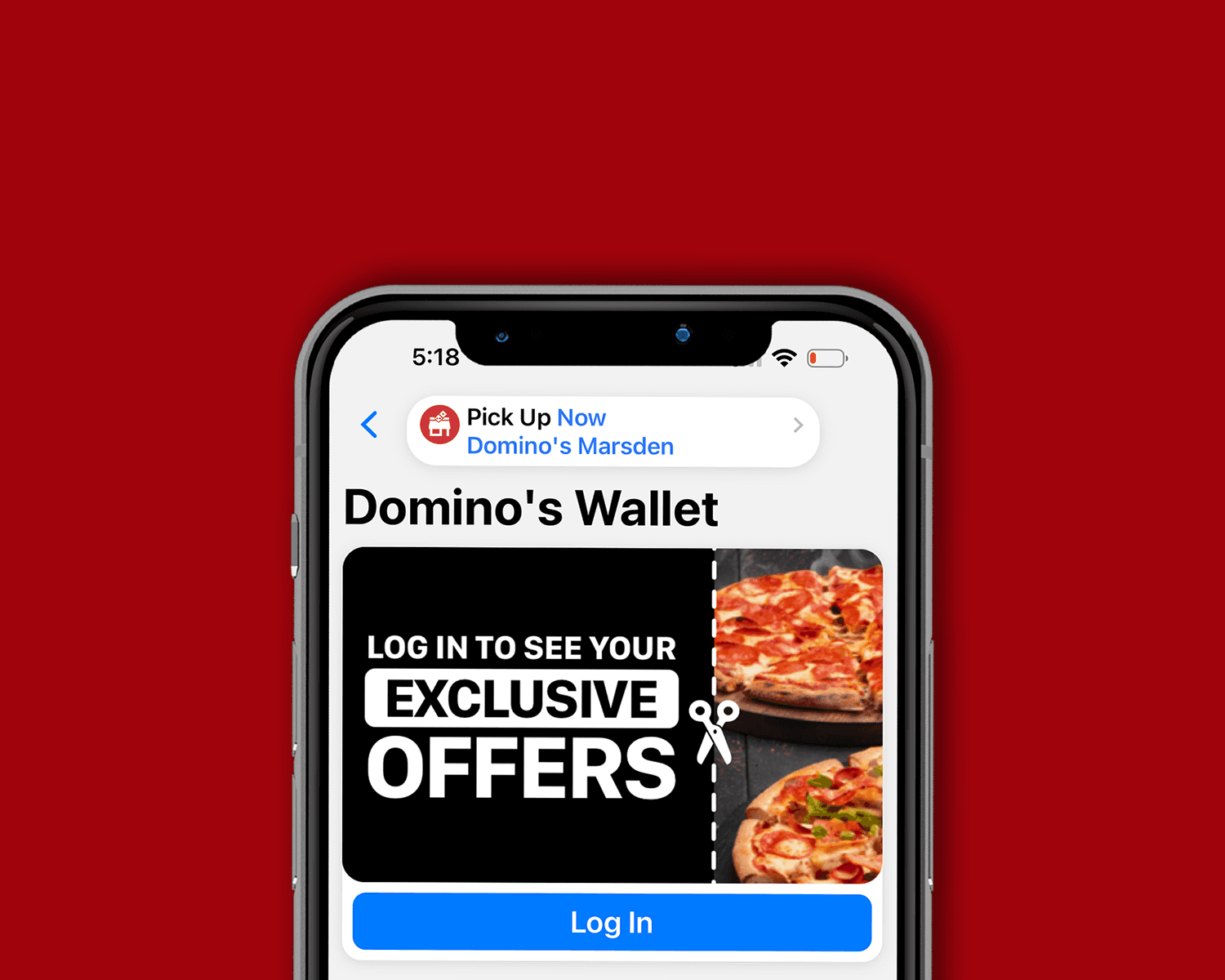
Domino's ran promotions through a standalone "Wallet" app, separate from where people actually ordered. Good intentions, real friction:
Deals were siloed from the ordering flow, so users browsed offers in one app and built their cart in another.
Many assumed deals applied automatically. They didn't. And the gap showed up as "I didn't get the deal I tapped" in support tickets.
Redemption was low, confusion was high, with promo complaints and inconsistent pricing a recurring theme in App Store reviews.
This wasn't a UI bug. It was a problem of clarity, trust, and timing.
The Goal
Rather than redesign the Wallet, I reframed the brief with Product and Marketing around a single question: how might we make Domino's deals feel effortless and rewarding — not like a puzzle the user has to solve? That shifted the work from "make the deals page nicer" to "make the deal disappear into the order," which changed every decision that followed.

Research & Insights
With two weeks, I leaned on fast, defensible validation:
An analytics review showed a heavy drop-off between opening the app and actually applying a deal — most people who went through checkout weren't using deals from the Offers app.
App Store reviews surfaced a consistent thread of promo confusion.
Approach & Decisions
I created two main competing flows and tested these with internal staff across Global markets:
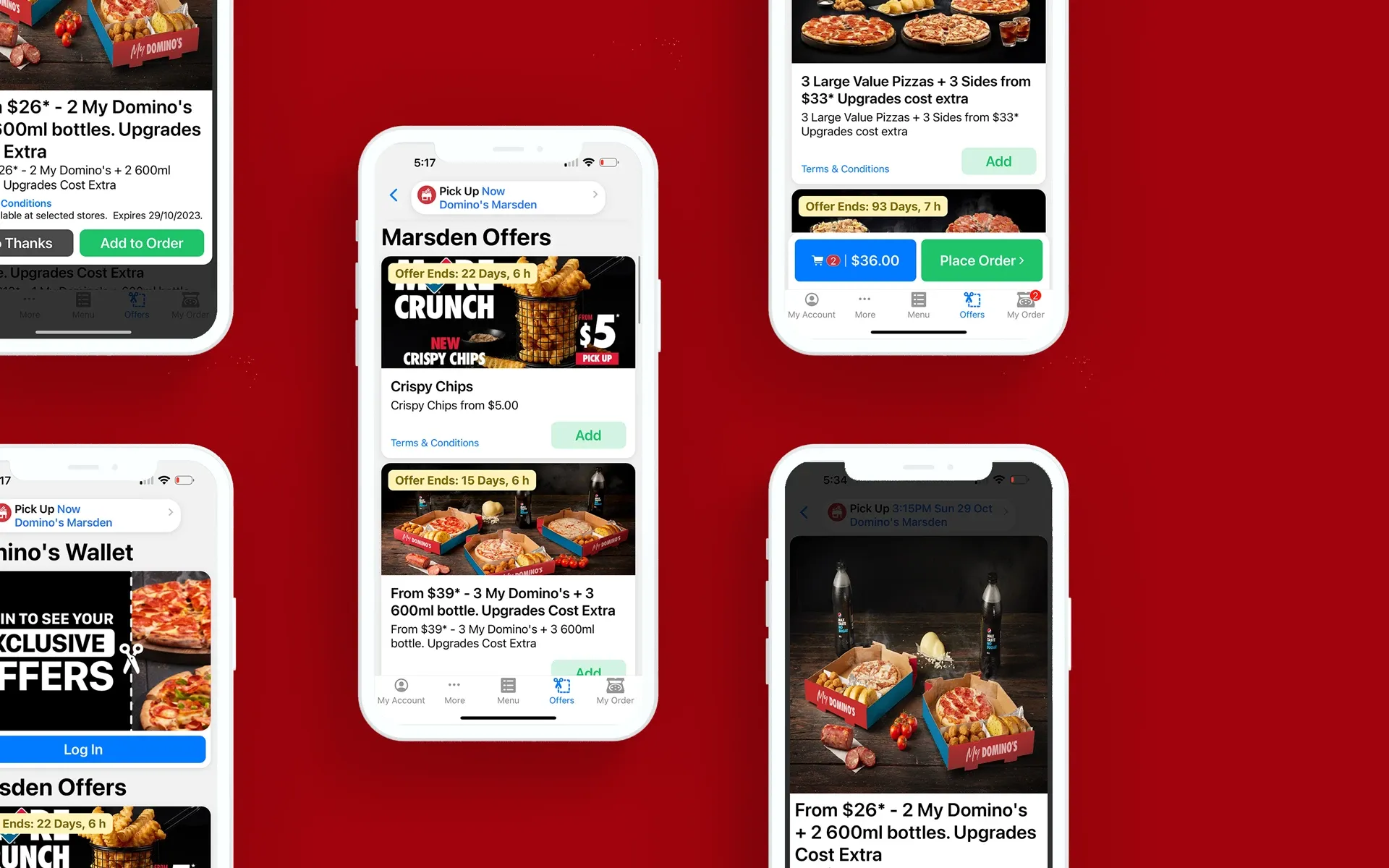
Larger Stacked Card — larger area allows for more text, creating more accessible flow, reducing friction with a quick add option to cart. Larger image area allows for Marketing to create artwork that can be easily scanned by customers.
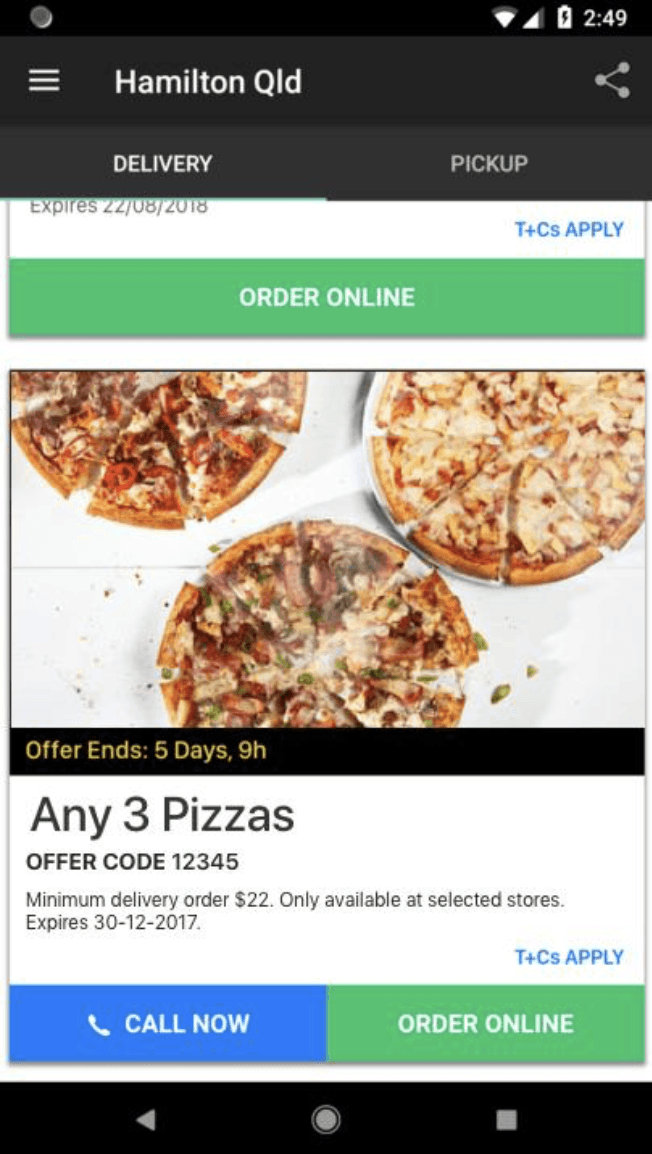
Smaller Horizontal Card — easy add to cart option, requires an additional step to view more information about the deals, especially for other global markets.
I chose the larger stacked card layout to ensure a more accessible experience. It allowed more information to be immediately visible, reducing the need for customers to tap into each card to read the restrictions. It also allowed more area for Marketing to promote campaigns across global markets.
Solution
A "My Offers" tab, integrated into the main app nav — surfacing available, applied, and upcoming deals, with savings shown in real time.
Linked to store locations — offers would update according to the store that customers would select during initial order setup.
Clear confirmation feedback — a toast on apply ("Deal applied: 2 large pizzas for $14.95") plus a checkout summary, so users never had to wonder whether it worked.
Outcome
A redesign that moved both the user experience and the business:
Offer redemption roughly doubled after launch.
Increased account sign ups were a biproduct of the offers section due to including a VIP sign up card.
Campaign rollout got simpler for Marketing Ops.
Internally it was described as the first time offers didn't feel like an afterthought. The approach became a reusable model for later product launches, including early Domino's Rewards planning that I was involved in.
Takeaways
The biggest lesson: UX for promotions isn't about pushing value, it's about removing uncertainty. Deals have to feel automatic, transparent, and valuable at a glance. It also reset how I weigh internal alignment: getting Marketing Ops brought in early mattered as much as any user test, because a flow that the campaign tooling can't support never ships.